Marine piping and pump selection: matching the system duty, not just the flow rate
A pump must operate within a complete piping system. Selecting equipment from flow rate alone can miss suction limitations, pressure losses or unsuitable materials. Vessel systems also need coordinated machinery access, supports and structural interfaces.
Section 01Define the service and operating envelope
Record the fluid, required flow range, temperatures and relevant pressure conditions. Bilge, cooling-water, fuel, freshwater and waste-water systems have different duties and suitability requirements. Confirm the applicable vessel rules and operating requirements.
My documented work includes vessel piping systems and pump selection in Namibia and Angola. These are coordinated design scopes, not an implication that one pump type or piping arrangement suits every marine service.
Section 02Assess the system rather than an isolated pump
Static head, pipe losses, fittings, valves and connected equipment affect the duty. Operating points can change with tank levels or valve arrangements. Review the relevant cases rather than selecting equipment at one unverified nominal condition.
Suction conditions and available net positive suction head require attention using verified inputs and supplier information. A pump’s advertised maximum flow is not a complete statement of suitability.
Section 03Coordinate materials and pressure interfaces
Pipe material, joining methods, corrosion exposure and fluid compatibility influence selection. Flanges, valves and equipment connections must meet the agreed service basis. Pressure designation alone does not establish compatibility or complete system integrity.
Supports, thermal movement and relevant vessel actions affect the layout. Avoid transmitting unassessed loads into machinery nozzles or assuming that an existing support remains suitable after a modification.
Section 04Design for installation and maintenance
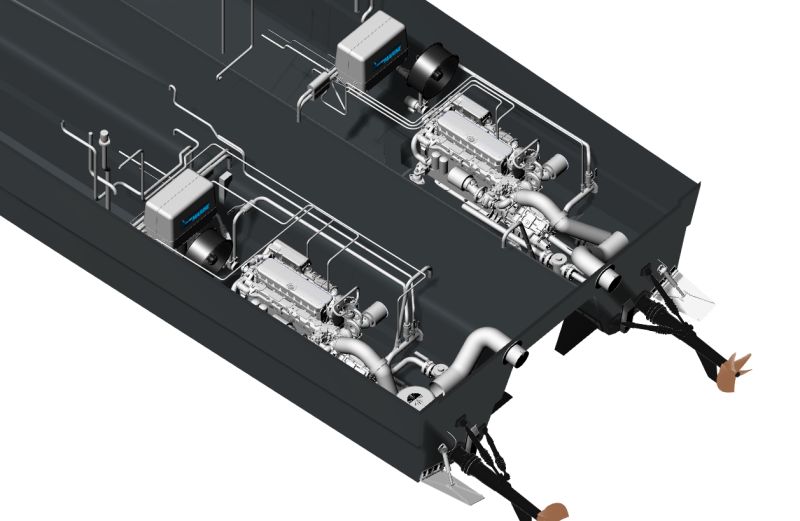
Provide space for valve operation, strainer servicing and equipment removal. A compact model may conceal inaccessible fasteners or components trapped behind other systems. Coordinate hull structure, machinery and piping before final fabrication drawings.
Fabrication-ready spool information needs dimensions, orientation, materials and inspection requirements. Where geometry is uncertain, specify a survey or controlled field-verification requirement rather than modelling an assumed fit.
Section 05Verify the installed system
Commissioning and testing responsibilities should be defined with the owner and equipment suppliers. Record approved changes and updated drawings. For Walvis Bay vessel projects, early coordination between the yard, operator and design team can prevent avoidable rework.
- Fluid and duty schedule.
- System and suction-condition assessment.
- Material, support and equipment interfaces.
- Fabrication, testing and maintenance access.