Marine engineering and naval architecture in Namibia
Boat design is a coordinated engineering task: hull structure, machinery, piping, access and safety information must agree. My naval architecture and marine engineering experience includes steel and FRP high-speed boats, vessel systems, modifications to existing ship structures, new ship mezzanine designs and crane-base design on ships.
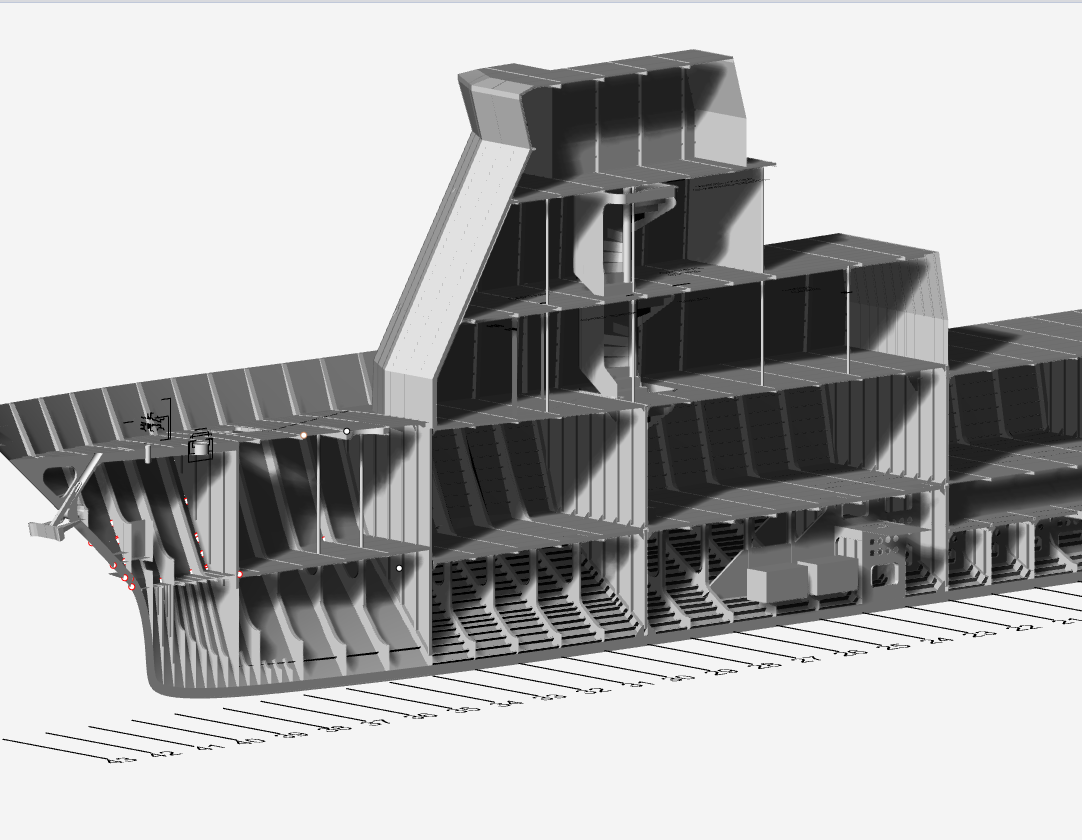
Section 01Ship structural modifications, new mezzanines and crane bases
My ship-structure experience includes modifications to existing ship structures, the design of new ship mezzanines and crane-base design on ships. These complement the workboat mezzanine, crane and davit foundation projects already in the portfolio.
For a new modification, the engineering scope should establish the existing vessel condition, intended loads and interfaces with decks, stiffeners and supporting structure. Mezzanine layouts also need to account for access and vessel operations; crane foundations require project-specific crane reactions and load transfer into the ship. These are general design considerations, not additional claims about the particulars or approval status of the completed work.
Section 02High-speed boat structure and systems
Design work covers hulls, frames, decks, stiffeners, bulkheads and engine girders, with DNV, BV or ISO requirements considered where applicable to the vessel. Material choice and operating conditions influence the load model, structural details and fabrication method.
Systems experience includes propulsion, cooling-water and fuel piping, bilge, exhaust, firefighting, fresh and grey/black water, HVAC, anchoring and mooring. Equipment access and structural interfaces are coordinated with the vessel layout.
Section 03General arrangement and safety drawings
I have recreated boat general-arrangement and safety drawings from old drawings. This work translates legacy information into usable vessel documentation while identifying where field verification is needed. A recreated plan is not automatically an approved as-built document; its status and intended use must be clearly stated.
The portfolio also includes crane and davit bases, boat piping spools, workboat mezzanine decks and preliminary designs for a 100 m dry dock and a floating dock in Walvis Bay.
Section 04Engineering deliverables
Deliverables are selected to suit the commission rather than assumed to be identical for every vessel. They can include structural design information, 3D models, fabrication drawings, piping layouts and reconstructed vessel plans. Class submission and third-party certification are separate responsibilities that must be agreed explicitly.
Section 05Discuss a vessel project
Useful starting information includes vessel dimensions, material, operating speed, service area, equipment list, class basis and available drawings. For retrofit work, the first question is often whether the existing geometry and equipment arrangements have been verified on board.
Related
- High-speed boat design: structure, systems and drawing coordination
- Recreating boat general-arrangement and safety drawings from legacy plans
- Marine piping and pump selection: matching the system duty, not just the flow rate
- Marine infrastructure in Namibia: docks, access and structural interfaces
- Coastal engineering in Namibia: what a design study must establish
- Onshore, industrial and offshore structural engineering in Namibia