Hydrophore tank assessment: replacement versus internal lining
A hydrophore vessel assessment must separate containment integrity from corrosion protection and installation feasibility. An internal lining and a replacement vessel solve different problems. The correct option depends on measured condition, service requirements and the responsible pressure-equipment assessment.
Section 01Confirm the equipment type and duty
Identify the vessel, service fluid, pressure and temperature envelope, original design records and inspection history. A hydrophore pressure vessel should not be assessed as though it were an atmospheric API 650 storage tank. The applicable equipment rules and approval responsibilities must be established.
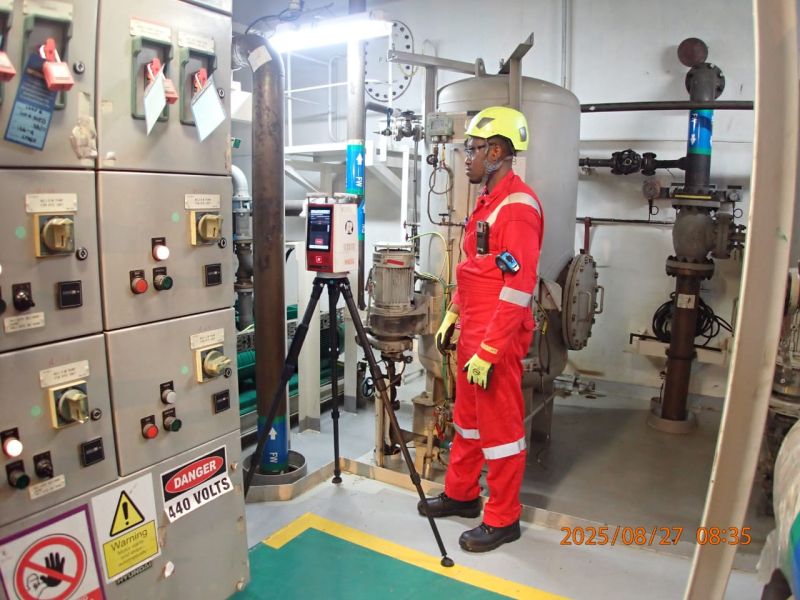
My Kaombo Norte and Kaombo Sul FPSO work included replacement-versus-carbon-fibre-lining assessment, access constraints, scanning and method statements. This is documented survey context, not proof that lining is acceptable for a particular pressure vessel.
Section 02Establish remaining condition
The assessment needs reliable information on shell condition, connections, internal features and the damage mechanism. Thickness readings, examination requirements and acceptance must be specified by the competent assessment team. Surface appearance alone cannot establish remaining pressure capacity.
A lining may provide a protective barrier, but any claim that it restores structural capacity requires a qualified design and application basis. Product compatibility, adhesion, inspection access and continued corrosion must be considered separately from the vessel’s pressure integrity.
Section 03Compare practical replacement routes
Measure hatches, doors, overhead restrictions and laydown areas, not only the equipment footprint. Consider transport, lifting interfaces and whether surrounding services must be removed. Replacement feasibility can change substantially when the complete route is surveyed.
A laser scan helps capture congested geometry, but concealed dimensions and lifting clearances may still require direct verification. Record the survey assumptions so an apparently feasible route is not mistaken for an approved lifting plan.
Section 04Define the lining proposal precisely
The proposed system needs a stated function, expected service life and verified compatibility with the stored fluid and operating envelope. Potable-water service, where applicable, brings additional suitability requirements. The manufacturer’s evidence and responsible engineering review are essential.
Installation conditions, substrate preparation and subsequent inspection must be covered by approved documentation. A lining that hides deterioration or prevents meaningful inspection can create future integrity-management problems.
Section 05Make a traceable option comparison
Compare integrity, approval pathway, outage duration, installation constraints and lifecycle maintenance, not only initial cost. Record what is verified and what depends on further inspection or vendor confirmation. Offshore owners should be able to see why an option was recommended.
- Pressure-equipment design and inspection records.
- Condition assessment and lining purpose.
- Surveyed removal and replacement route.
- Approval, inspection and return-to-service requirements.