Sea fastening offshore equipment: connecting transport loads to the vessel
Sea fastening is an engineered restraint system for marine transport, not simply a collection of extra welds. The cargo, route assumptions and vessel support arrangement determine the required assessment. Lifting design and transport restraint are related interfaces but different load cases.
Section 01Define cargo and transport assumptions
Confirm mass, centre of gravity, geometry and the verified attachment points. Establish the voyage and vessel basis with the responsible marine transport team. Acceleration assumptions and environmental limits must suit the project rather than a generic internet example.
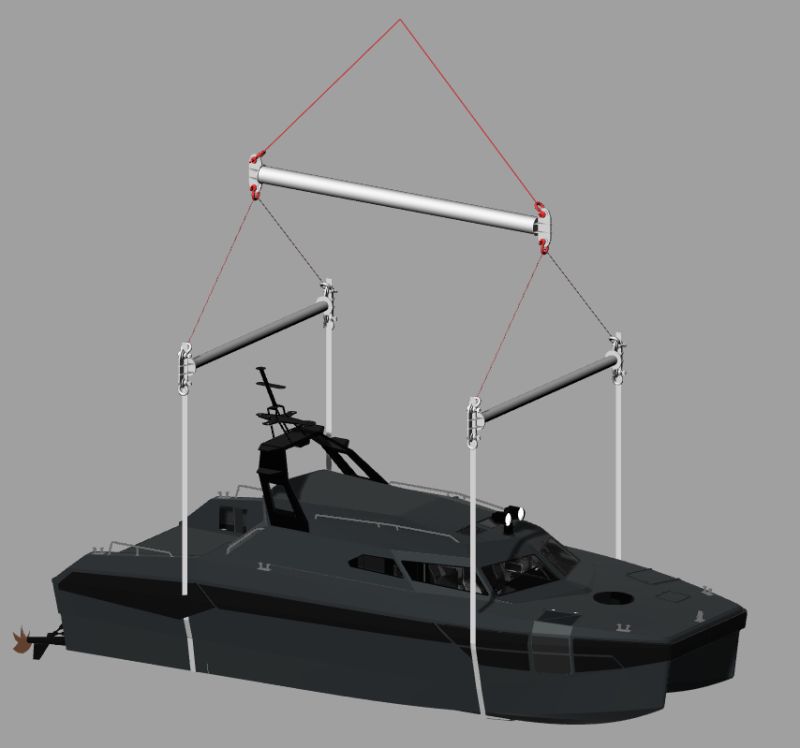
My Namibia portfolio includes drill-line stand design, lifting-operation planning and sea fastening. The vessel-lifting model is representative of handling coordination, not a drawing of that stand or its restraint system.
Section 02Trace restraint forces through the system
Cargo supports, stoppers, ties and attachments transfer loads into the deck and underlying vessel structure. Consider credible movement directions and how restraints share load. Friction assumptions need a justified basis and should not conceal missing positive restraint.
Support contact, local bearing and load distribution affect the receiving deck. A restraint member can be strong enough while the deck plate or supporting frame beneath it is not.
Section 03Check installation and temporary conditions
The cargo must be handled and positioned before the completed restraint system can act. Coordinate temporary support, lifting interfaces and the installation sequence with the reviewed operation plan. Do not assume that the final restraint arrangement covers every intermediate stage.
Access for attachment, inspection and removal can govern the practical design. Consider nearby services, coating damage and whether the vessel permits the proposed attachment method.
Section 04Specify verification and approval interfaces
The design package should identify materials, connections, support reactions and installation tolerances. Owner, class or marine-warranty review may be required depending on the project. Their responsibilities should be confirmed rather than inferred from a standard reference.
Inspection records must establish that the installed restraints correspond to the reviewed arrangement. Last-minute changes in cargo location or equipment mass should go through the agreed review process.
Section 05Plan controlled removal and records
Removal at destination may affect the vessel coating or supporting structure. Include restoration and inspection responsibilities in the project scope. Retain the cargo and restraint records so later transport does not reuse an arrangement without checking its assumptions.
- Verified cargo properties and transport basis.
- Restraint-to-vessel load path.
- Installation and inspection requirements.
- Removal, restoration and change control.