Steel base plates and anchor bolts: coordinating the foundation interface
The base of a steel column is a structural interface, not just a plate beneath the member. Base plates, anchors, concrete and the foundation must transmit the intended forces together. Coordination is essential because different disciplines may be responsible for different parts of the same load path.
Section 01Define reactions and base behaviour
Provide the relevant compression, uplift, shear and moment information with the applicable combinations. The steel analysis must state the assumed base restraint. A fixed-base model is not justified merely by drawing anchor bolts around a plate.
Equipment-support frames and industrial building columns may introduce different reaction patterns. The foundation designer needs a consistent load schedule, not one isolated maximum from each action with no indication of how they combine.
Section 02Check the plate and force-transfer arrangement
Plate bending, bearing and local connection behaviour require assessment under the selected standard. Where shear or uplift is transferred through particular details, make that intended mechanism explicit. Do not leave the receiving concrete or anchorage assumptions implicit.
The final plate dimensions, stiffeners and welds should agree with the design. A typical detail copied from another project does not establish capacity for a new column or load combination.
Section 03Coordinate anchors and concrete verification
Anchor design depends on configuration, material, embedment, concrete condition and the governing assessment method. Relevant concrete failure modes and edge effects require competent review. Nominal bolt tensile capacity alone is not the foundation-interface capacity.
New cast-in anchors and anchors installed into an existing foundation are different design and installation problems. Verify the available records and substrate. Supplier data and installation requirements must be appropriate for the specified application.
Section 04Resolve tolerances and installation access
Anchor position, plate-hole arrangement and erection tolerances should be coordinated before casting or fabrication. Include access for installation and inspection. Unreviewed bending of anchors or site changes to holes can undermine the assessment.
Grouting and levelling arrangements affect the intended support condition. Their specification and execution should be handled by competent parties through the approved project documentation, not inferred from a generic online detail.
Section 05Document discipline responsibilities
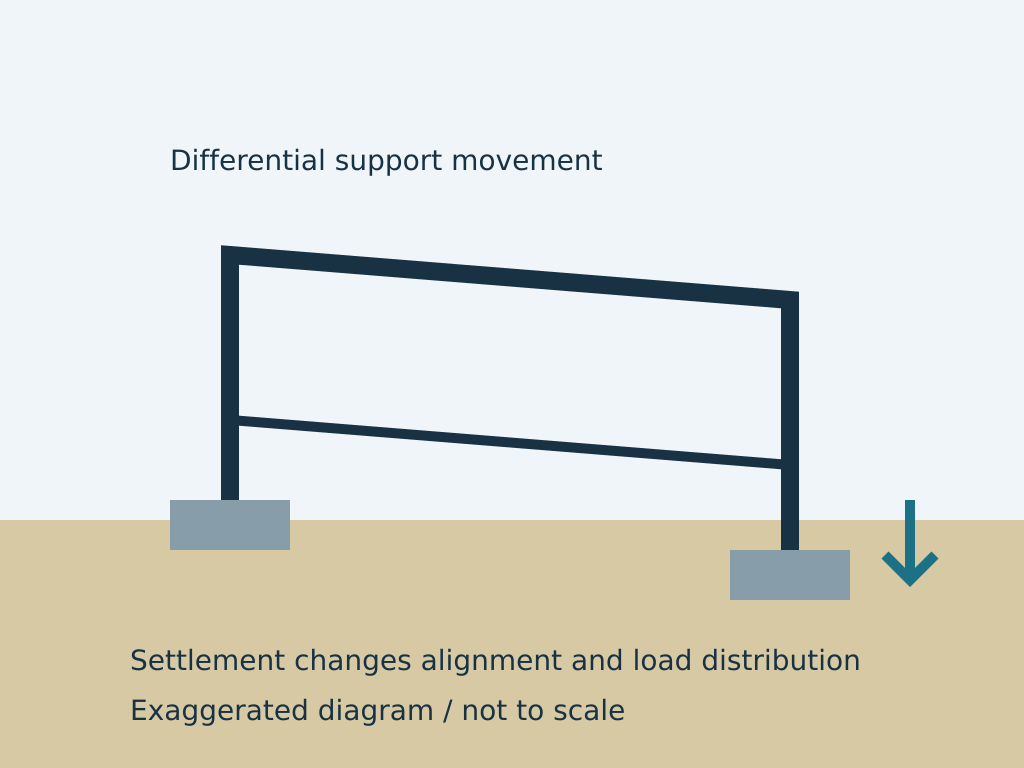
Agree who designs the steel connection, anchors and concrete foundation, and how their interfaces are checked. Record the verified foundation condition and as-built changes. The educational settlement diagram highlights support behaviour; it is not a base-plate calculation or construction instruction.
- Compatible load combinations and restraint assumptions.
- Plate, anchor and concrete checks.
- Position, erection and inspection requirements.
- Foundation coordination and as-built records.