Existing industrial steelwork: assessing modifications, corrosion and reinforcement
An existing industrial structure should not be treated as a new frame with known properties. Corrosion, undocumented alterations and changed loading can make old drawings an incomplete basis for design. A modification assessment needs evidence of the actual structure and a clearly defined new duty.
Section 01Establish what exists and what will change
Collect original drawings, modifications and inspection records, then compare them with the asset. Define whether the proposed change adds equipment, alters access, changes stored loads or removes a support. Survey the relevant load path, not only the location of the new item.
My documented survey-led reinforcement experience is predominantly offshore. The methods discussed here explain general onshore assessment considerations; they do not imply a completed onshore strengthening project that has not been documented.
Section 02Verify condition and material information
Measure relevant geometry and record section loss, damaged connections and inaccessible areas. Material properties should be based on reliable records or appropriate investigation. A section that resembles a standard catalogue profile does not establish its material grade or current thickness.
Corrosion measurements and NDT should be selected to answer the assessment questions. Visual inspection can identify concerns but does not independently establish remaining capacity or rule out cracking. State the coverage and limitations clearly.
Section 03Reassess loading and structural behaviour
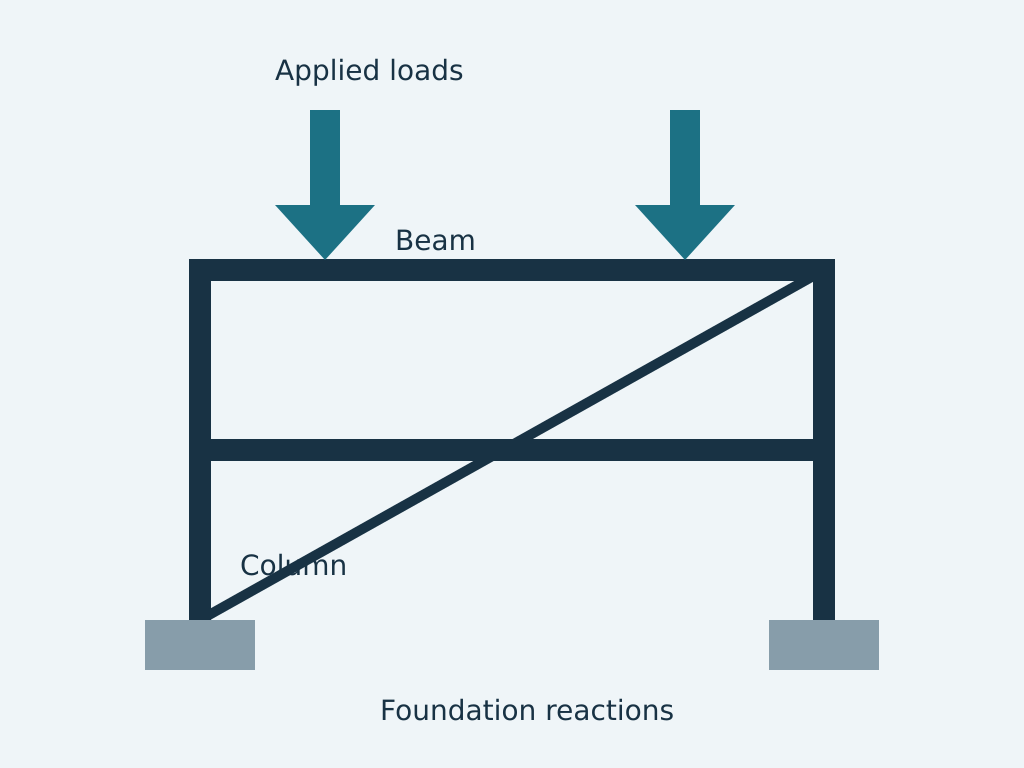
Compare the existing and proposed load cases using actual support conditions and geometry. Check connections, stability and serviceability as well as member strength. Removing a seemingly secondary brace can change the building’s lateral behaviour.
Changes can also affect foundations and anchors. Coordinate reactions and the ground or foundation assessment with the responsible specialists. Original design intent is useful context, but it is not evidence of unused capacity.
Section 04Design reinforcement around the cause
A strengthening detail should resolve the assessed deficiency and transfer forces into suitable receiving structure. Additional plates or members can change stiffness and redistribute loads. Check adjacent components rather than assuming that added steel always improves the system.
Consider installation constraints, temporary support and inspection access. Corrosion protection and future maintenance should be coordinated so the intervention does not hide continuing deterioration or create inaccessible details.
Section 05Record use limits and reviewed changes
The handover should identify the evidence used, assessment assumptions and required follow-up. Urgent condition concerns need escalation through the owner’s asset-management process. For Namibia industrial enquiries, photographs and records help scope a survey but cannot replace an on-site assessment when one is required.
- Verified as-built information and condition.
- Existing and proposed load cases.
- Reviewed repair and support interfaces.
- Inspection, operating limits and final records.