Offshore helideck structural design: loads, supports and approval interfaces
A helideck is an aviation facility supported by an offshore structure. Its design must coordinate structural requirements with the asset’s operational and approval requirements. A strong deck plate alone does not establish a suitable landing facility or an adequate supporting rig.
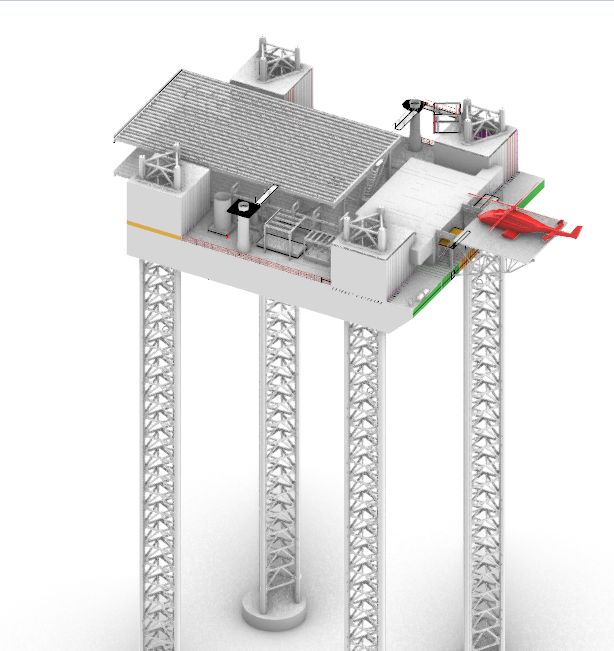
Section 01Establish the aircraft and operational basis
Confirm the intended aircraft, operating requirements and the applicable aviation, owner and class criteria. Landing actions and other relevant conditions must come from that verified basis. Do not substitute an arbitrary uniform deck load for aircraft-specific requirements.
My documented oil-rig helicopter-deck work in Ivory Coast used a DNV-aligned design basis. This states the project context, not independent certification or aviation approval of the website’s educational guidance.
Section 02Analyse deck and support behaviour together
The deck surface, stiffeners, main members and supports transmit forces into the asset. Concentrated loads and local behaviour may govern some components, while global support reactions govern others. Model assumptions should correspond to actual restraints and connections.
Check stability and relevant deformation limits in addition to strength. An existing support structure may require condition assessment and reinforcement; its original design information does not establish current spare capacity.
Section 03Coordinate operational interfaces
Drainage, access, safety systems and surrounding obstructions need coordination with the responsible specialists. Structural changes can affect equipment, escape arrangements and maintenance access. These interfaces must be identified before fabrication release.
Structural calculations are only part of the approval package. Clearly allocate review responsibilities rather than presenting a rule reference as evidence that all operational requirements have been satisfied.
Section 04Plan fabrication and inspection
Drawings should specify materials, member geometry, connections and the agreed inspection requirements. Offshore assembly constraints may influence transportable sections, lifting points and weld access. Temporary installation conditions need attention where they differ from normal service.
Coating and corrosion-management details affect lifecycle maintenance. Ensure that inspection of important connections remains practical after services and equipment are installed.
Section 05Verify the final reviewed arrangement
Capture as-installed geometry and deviations, with engineering review where required. The owner and relevant authorities determine operational acceptance through their applicable processes. A completed structural drawing package should not be represented as blanket permission to operate.
- Aircraft and operational design basis.
- Deck-to-asset load path.
- Aviation, class and owner interfaces.
- Fabrication, inspection and as-built evidence.